Product Strategy, Principal

Uncovering SMB Needs to Drive Merchant Growth

Building scalable strategies to help SMBs grow through a clear, repeatable approach to design and delivery
Driven by the new CEO’s vision, PayPal identified micro-businesses—SMBs with fewer than five employees—as a critical growth opportunity. I led an initiative focused on two priorities: defining a new value proposition for this segment and building a clear, systematic approach to design and delivery. Scalable strategies were developed to uncover unmet needs, surface product opportunities, and enable multiple cross-functional teams to move in parallel toward a shared objective with speed and alignment.
Customer Journey MappingStakeholder InterviewUX Strategy & DesignContent ArchtectureTwo-Sided MarketScenario MappingPlatform DesignB2BValue Proposition DevelopmentProcess OptimizationGap AnalysisInsight GenerationKano MatrixHypothesis Testing

Challenge

The business set out to develop a SaaS product for SMBs. Multiple cross-functional teams worked in parallel without a shared framework, leading to fragmented efforts and uncertainty around how to define a clear value proposition. At the same time, new executive leadership placed greater emphasis on design, increasing pressure to improve how work was structured and delivered.

Problem Statement

Developed a design strategy to introduce a clear, repeatable framework for identifying user needs, testing hypotheses, and defining a compelling value proposition for SMBs. This approach gave cross-functional teams the structure to collaborate effectively, align product features with user expectations, and scale product discoverability across the platform.

Role & Responsibility

Role & Responsibility

  • Customer Experience Strategy
  • Product & UX Design
  • Product Discoverability Strategy
  • Stakeholder Management
  • Scope Definition
  • Discovery
  • Scalable Design Process Frameworks
  • Value Proposition Design
  • Research Sensemaking

Key Activities

  • Audited content architecture
  • Conducted gap analysis
  • Mapped User Scenarios for Ideation
  • Led internal stakeholder interviews
  • Aligned cross-functional stakeholders on scope
  • Formulated scalable processes to test ideas
  • Conducted sensemaking and insight development
  • Developed discoverability strategies to drive user engagement and activation

Discovery
Stakeholder Interview
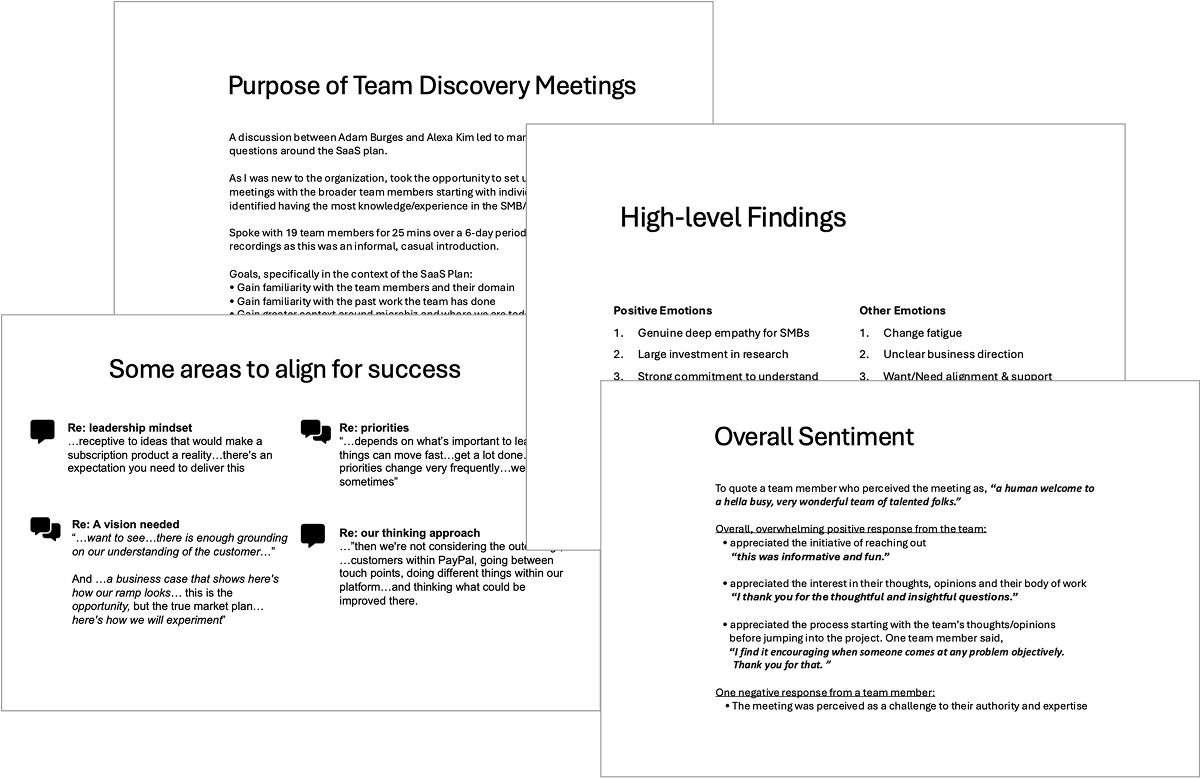
Conducted a series of interviews with stakeholders across the organization to gather insights on their goals and project scope. Identified areas of disconnect and developed actionable steps to realign cross-functional teams, refining the project’s direction. This process was instrumental in addressing key strategic challenges and guiding the resolution of critical issues within the SMB initiative.
Research Sensemaking
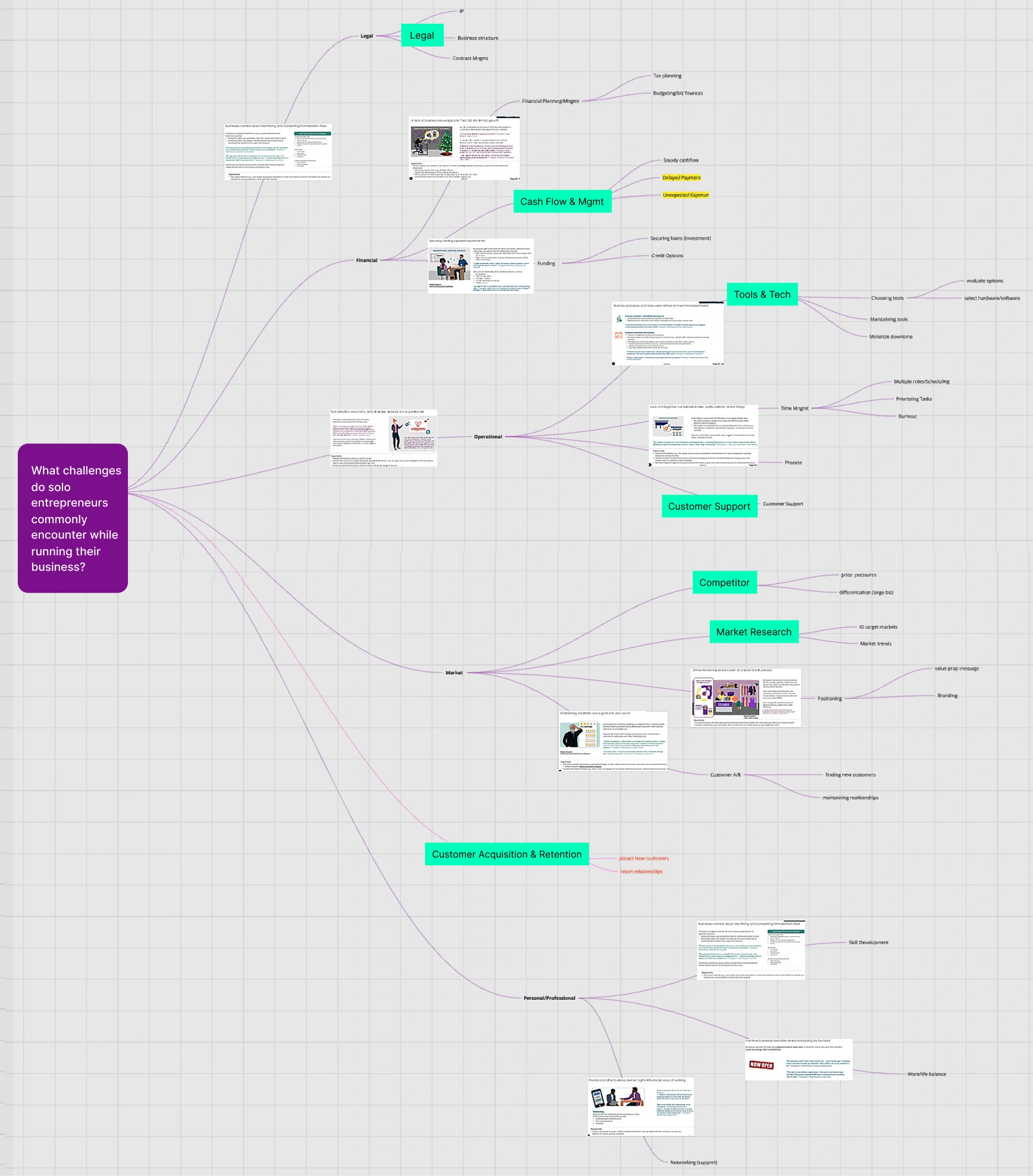
Deconstructed the key challenges faced by micro-business owners through a structured analysis using an issue tree. Mapped existing research and insights to these challenges, highlighting strengths and gaps in understanding to uncover further opportunities for learning about the users.

UX Strategy

Business Priority

“Where are we headed?” Define the strategic direction and align efforts with the organization's long-term goals.

Current & Future States

“Why do we need to change?” Highlight the gap between the current state and the desired future state to justify the need for change.

Systematic Learning

“What do we need to improve?” Identify improvement areas by assessing current challenges and opportunities.

Systematic Testing

“How do we improve?” Outline the approach for improvement through targeted experiments, assumption testing, and iterative solutions.
Business Priority
“Where are we headed?”
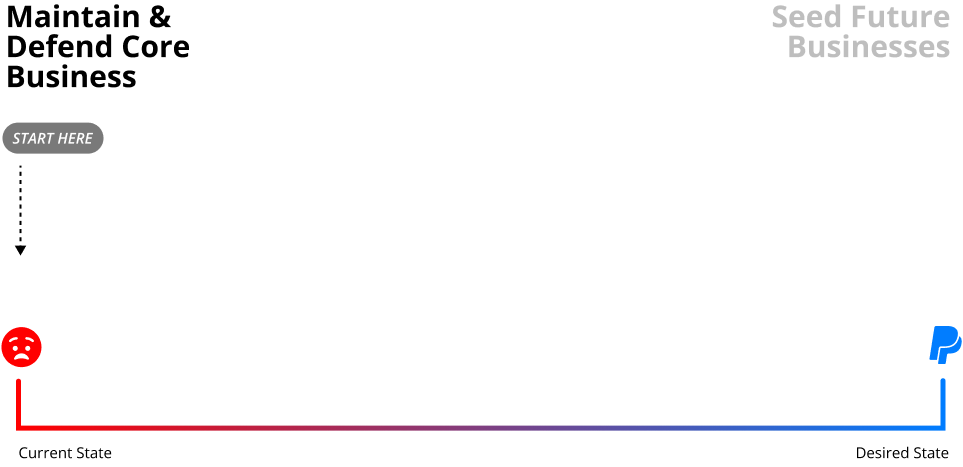
Focused on maintaining and defending the core business by strengthening existing products and services to ensure stability and sustained growth. Once the core business is secured, efforts can shift toward seeding future businesses, exploring new opportunities for innovation and long-term market leadership.
Current & Future States
“Why do we need to change?”

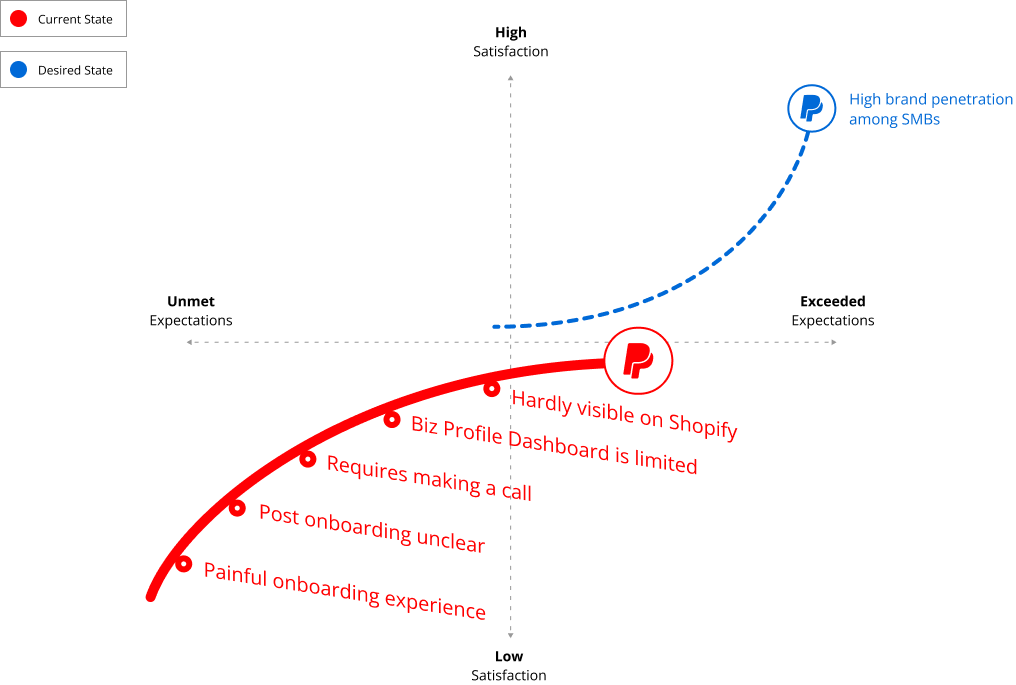
Performed an analysis of the current customer experience by mapping their journey using the Kano matrix, evaluating how well basic needs were met and measuring satisfaction at key touchpoints.
Systematic Learning
“What do we need to improve?”

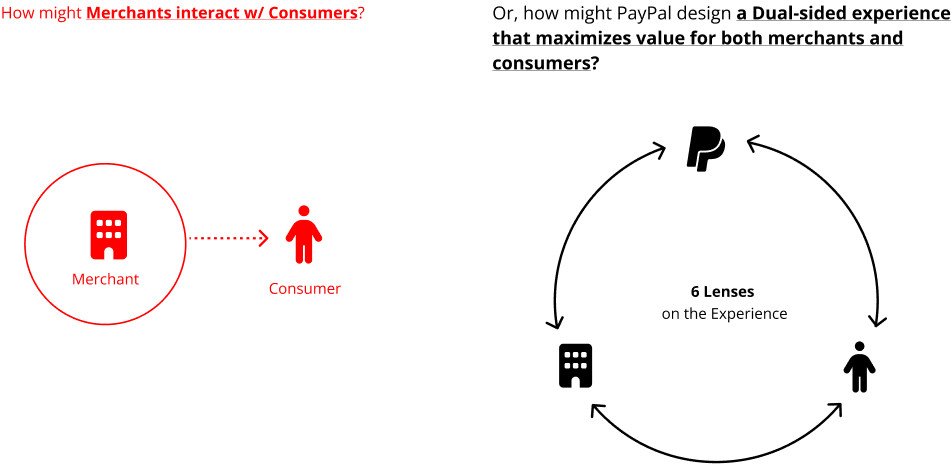
Shifted focus from merchant-consumer interactions to designing a dual-sided experience that maximizes value for both groups. Analyzed key areas for improvement, optimizing the platform to enhance engagement and drive long-term success.
Systematic Testing
“How do we improve?”

Developed systematic testing processes to empower cross-functional teams to independently conduct targeted experiments and gather feedback for iterating on product features. This structured approach mitigates risks, enables parallel progress across teams, and accelerates advancement toward a unified objective.

UX Design
Scenario Mapping
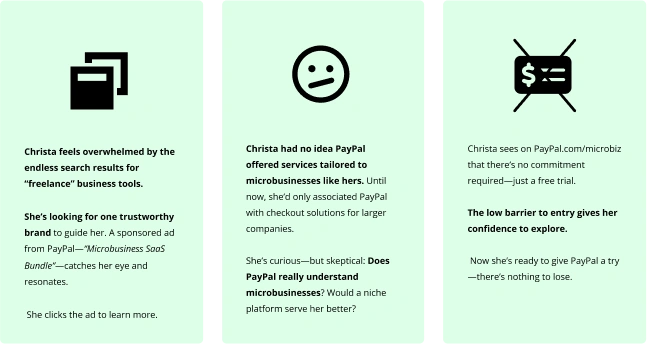
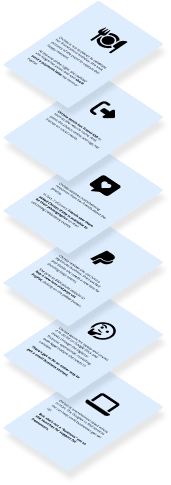
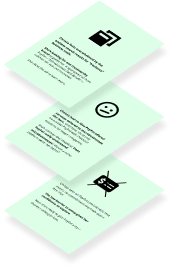
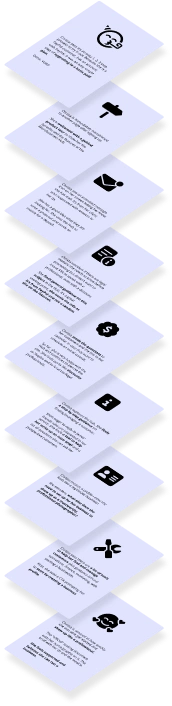
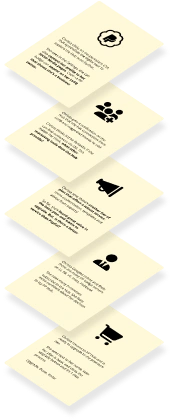
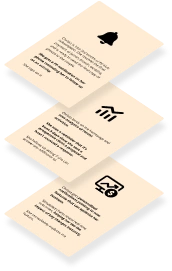
Developed the primary persona's storyboard using the Pirate Metrics (AAARRR) framework and created scenarios for each stage of the sales funnel. This process facilitated brainstorming, with each scenario (card) uncovering opportunity areas, identifying critical touchpoints, and helping prioritize the project scope.

Awareness

What metrics indicate a Merchant is aware of PayPal’s value proposition?
Activation

What metrics indicate a Merchant’s initial interest in PayPal’s value proposition?
Aquisition

What metrics indicate a Merchant’s intent to adopt PayPal’s value proposition?
Revenue

What metrics indicate a Merchant’s adoption of PayPal’s value proposition?
Referral

What metrics indicate a Merchant’s sustained usage of PayPal’s value proposition?
Retention

What metrics indicate a Merchant promotes PayPal’s value proposition?

3 Discoverability Strategies
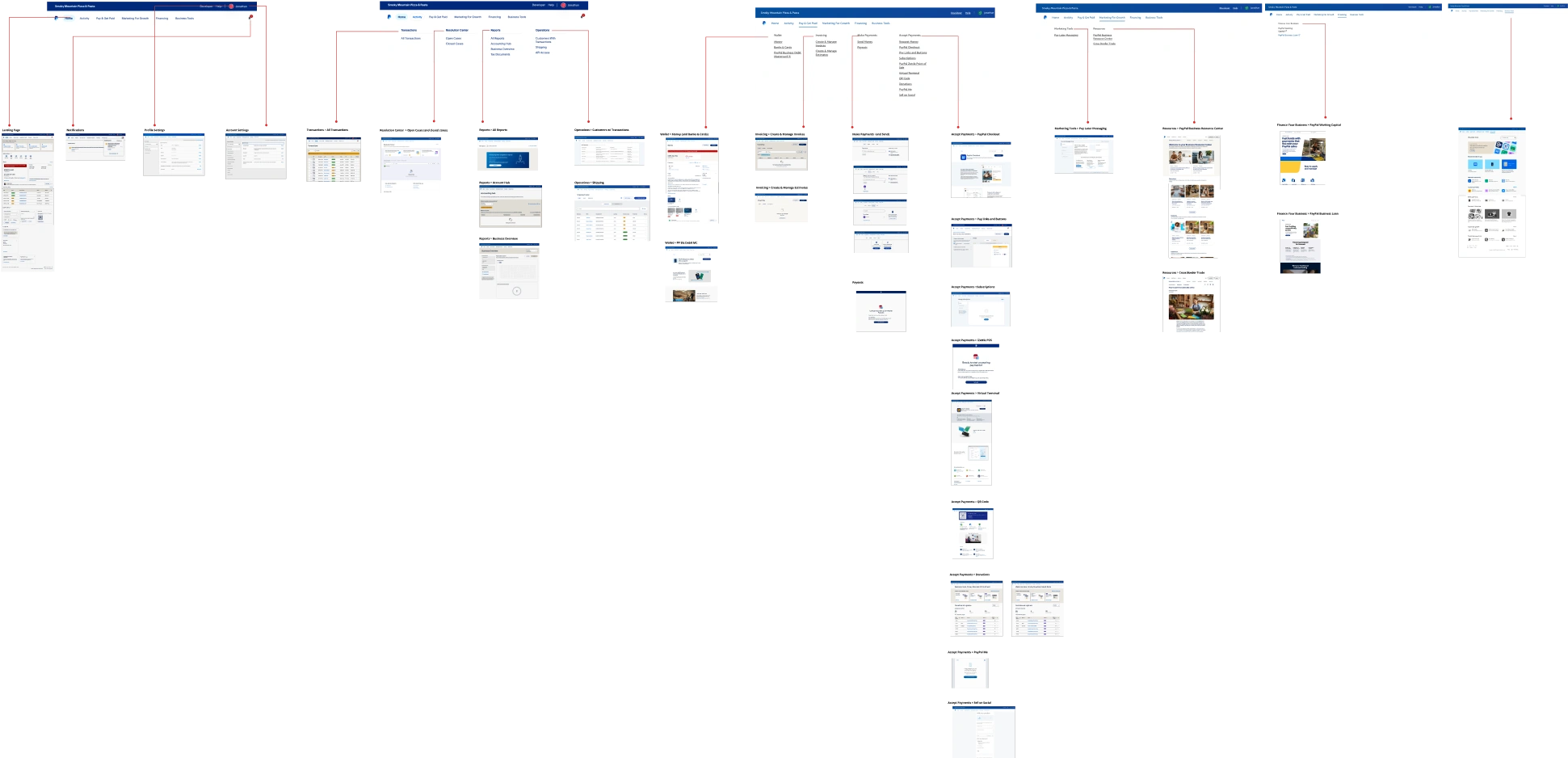
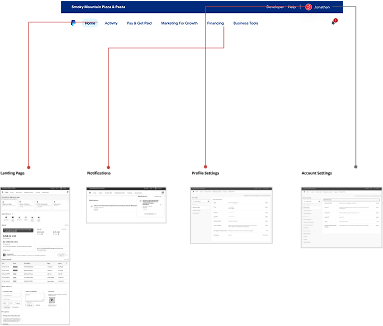
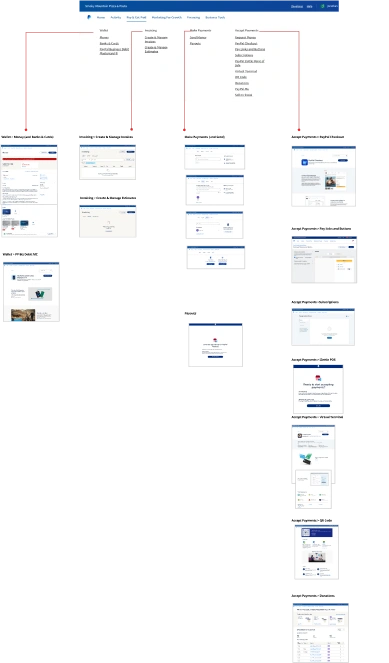
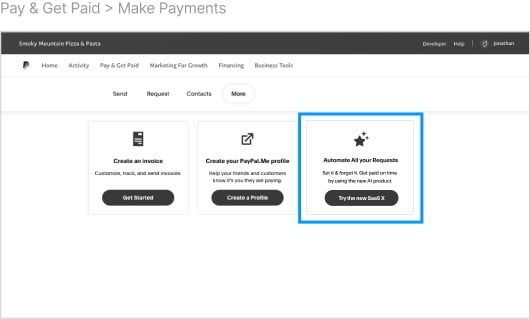
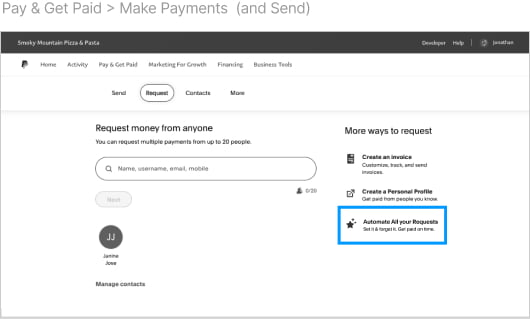
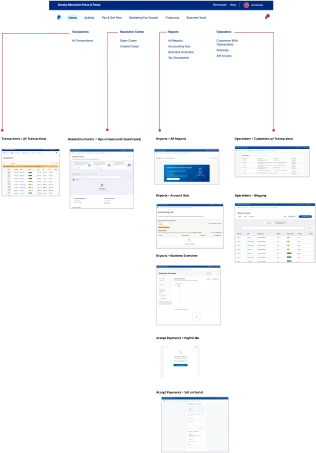
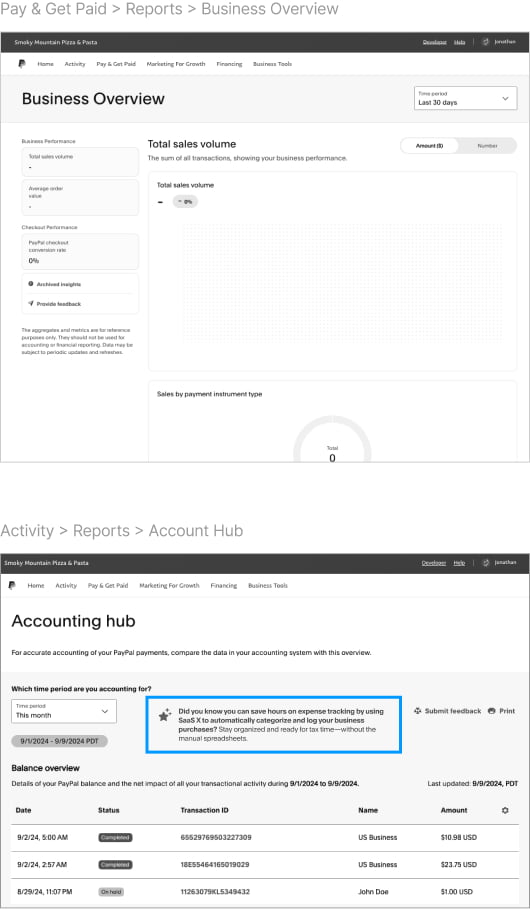
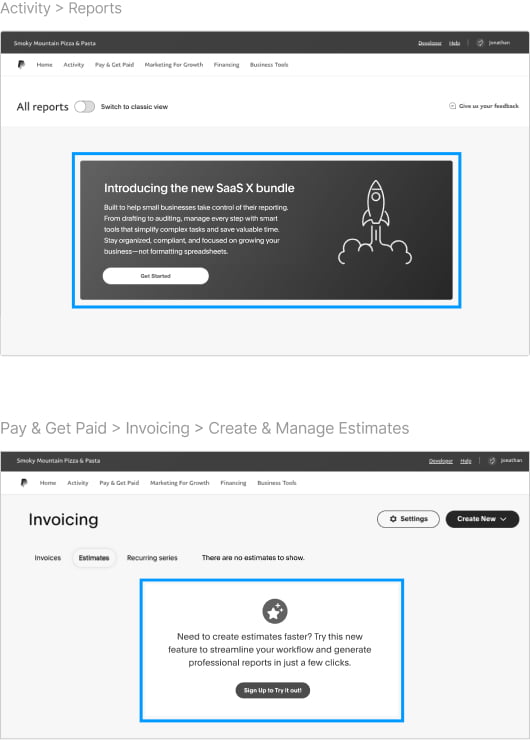
Developed 3 strategies to enhance the discoverability and activation of the new SaaS X bundle within the SMB platform for existing customers. Conducted a content audit of the Merchant platform to identify optimal ingress points in high-traffic workflows and critical touchpoints.
Strategy 1:
Persistent Placement
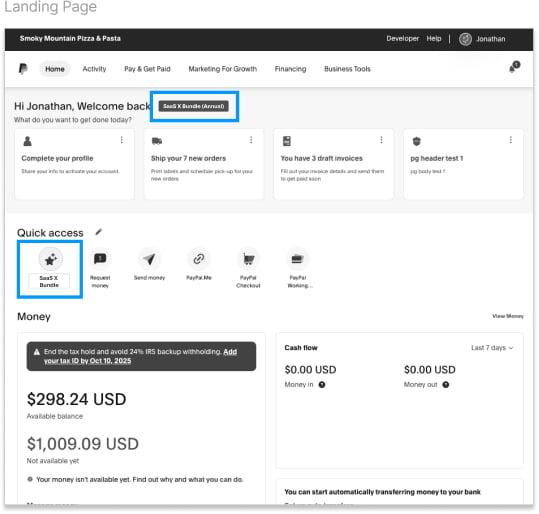
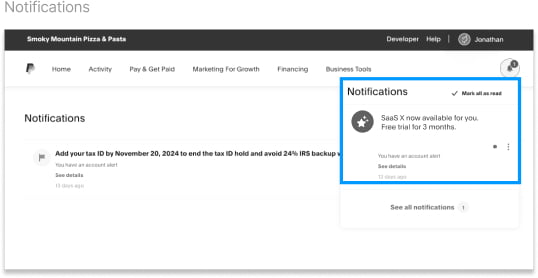
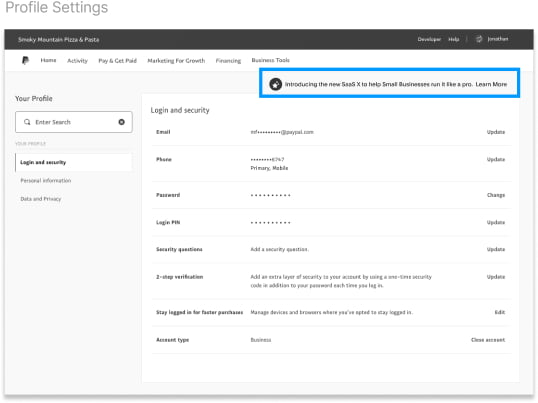
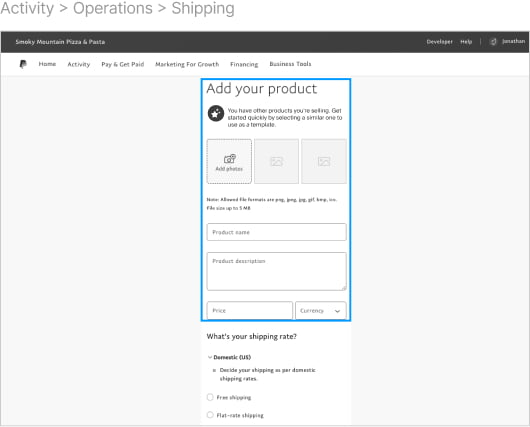
Designed and positioned entry points—such as banners, inline modules, and notification components—within persistent UI surfaces on global pages like the Landing Page and Profile. This ensured merchants regularly encountered the SaaS X offering in familiar, high-visibility areas without disrupting primary workflows.
Strategy 2:
Guided Preview
Designed an embedded experience that gives merchants a limited, in-flow preview of SaaS X functionality. Placed within high-traffic sections like Invoicing under “Pay and Get Paid” to maximize relevance and exposure. Aimed to demonstrate immediate value, spark curiosity, and drive deeper adoption through low-friction interaction.
Strategy 3:
Contextual Prompt
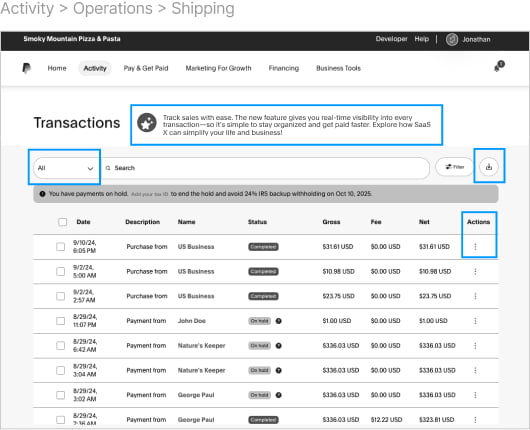
Designed a dynamic in-flow messaging strategy to surface the SaaS X offering at high-impact moments within merchant workflows. Used AI-assisted signals to identify areas with the greatest opportunity for improvement, delivering timely prompts.

Success Metrics

Impact Across Teams

Introduced scenario mapping, MECE issue trees, and structured discovery frameworks that unified product, research, and design teams. The new approach clarified priorities, cut rework, and accelerated delivery. In post-project reviews, 90% of stakeholders confirmed clearer direction and faster execution.

Opportunity Prioritization: Applied issue-tree and MECE frameworks to surface top 3 customer journey gaps, cutting duplicate discovery by 40%.

Cross-Team Coordination: Unified product, research, and design teams around shared frameworks, boosting delivery speed by 20%.

Structured Innovation: Introduced a repeatable framework for moving from insight to execution, creating clearer ownership and less rework.

Journey Reframing: Expanded journey mapping to include Awareness, Referral stages, driving a 12% lift in engagement.