Director, UXD
Amplifying UK Advisor Performance & Productivity
Enterprise Platform designed to boost financial advisors' productivity
Fidelity Investments has embarked on a multi-year strategic Digital Transformation initiative to unify the global Fidelity experience, beginning with markets in the European Union, specifically the U.K. market."
One of the main lines of business in the U.K. is serving Professional Advisors. FundsNetwork, a Fidelity enterprise product/platform, is available to financial institutions and used by Advisors to manage investments for their clients. The goal is to design a best-in-class administrative platform that is also aligned with the overarching digital strategy.
One of the main lines of business in the U.K. is serving Professional Advisors. FundsNetwork, a Fidelity enterprise product/platform, is available to financial institutions and used by Advisors to manage investments for their clients. The goal is to design a best-in-class administrative platform that is also aligned with the overarching digital strategy.
Enterprise Platform DesignWireframingProduct DesignDesign SystemDesign StandardsTeam CoachingUX StrategyUser Interface DesignVisual DesignInteraction Design
Challenge
Professional Advisors rely on the platform to complete critical tasks for their clients. However, the platform is laborious for high-volume tasks involving complex interactions and manual processes. As a result, their productivity and efficiency are impacted, deterring them from consistently using the platform.
Solution
We observed the Professional Advisors in their element—examining how they work, when and how they interact with the platform.
We designed a platform that reduces friction on repetitive actions and automated/simplified simplifies high-volume transactions by anticipating the next logical step in downstream processes.
We designed a platform that reduces friction on repetitive actions and automated/simplified simplifies high-volume transactions by anticipating the next logical step in downstream processes.
Strategy
UX Strategy Aligned to Business Outcomes
- Objective 1
Improve user productivity by providing a simpler and more intuitive navigation, smarter interaction and automation and enhanced efficiency on high volume high complexity tasks.
- Objective 2
Reduce the administrative overhead of intermediaries that service end clients and reduce/eliminate customer support overhead in the platform.
Scope
Role & Responsibility
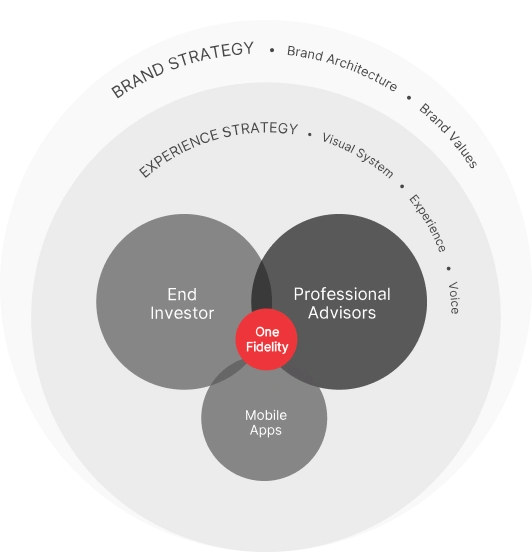
As the Director of UXD, I was responsible for developing the overarching Digital Brand Strategy of Fidelity International, U.K. and leading the implementation of the new brand strategy in two lines of business including Professional Advisor.
My role involved developing design strategy, managing stakeholders, collaborating with the Program Leads, Project Management, Research, and Technology.
I oversaw all design outputs while directing and coaching a team of product designers, leading the customer experience and visual design of the platform. To ensure a consistent voice and tone across channels, I collaborated with Content Strategy to align with the brand values.
My role involved developing design strategy, managing stakeholders, collaborating with the Program Leads, Project Management, Research, and Technology.
I oversaw all design outputs while directing and coaching a team of product designers, leading the customer experience and visual design of the platform. To ensure a consistent voice and tone across channels, I collaborated with Content Strategy to align with the brand values.
Concept Development
Problem
- We shadowed the Professional Advisors in their work environment. From observation, we learned the users had many workarounds to supplement the platform deficiencies.
- The Advisors need quick access to and juggle between various types of information and multiple clients data all at once.
Solution
- The new platform design consolidated and flattened the information architecture, limiting the number of start points to meaningful on
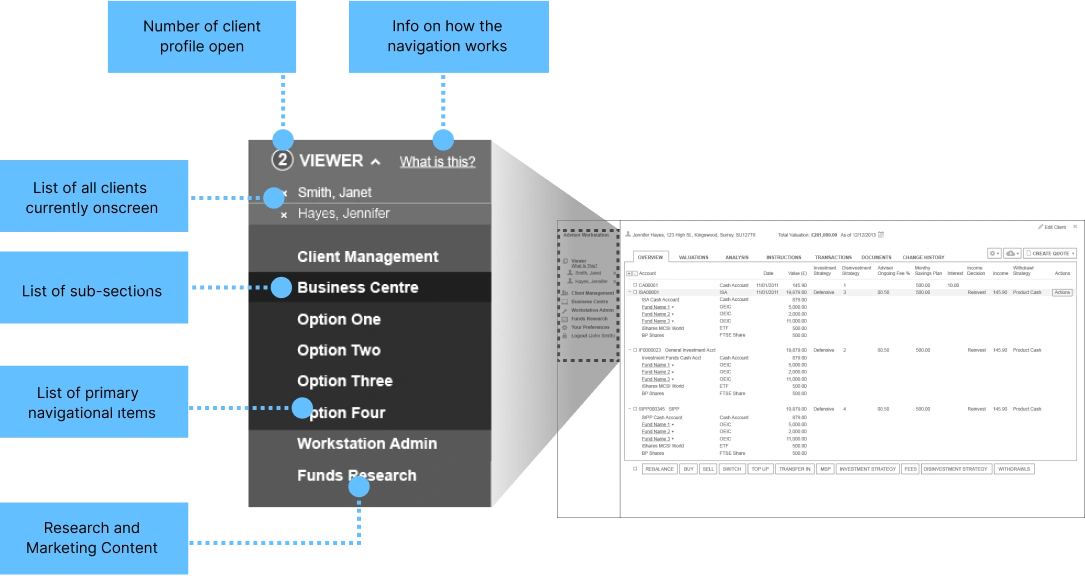
- Frequently performed tasks are prioritized in the navigation as persistent elements, reducing interaction complexity.
Information Architecture
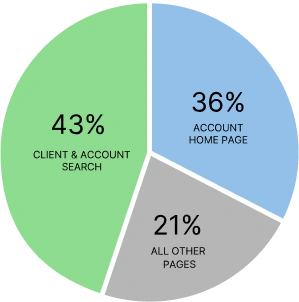
12 Month Analytics
80% of the users’ tasks were related to 2 main sections:
• Client and Account search
• Account Home Page.
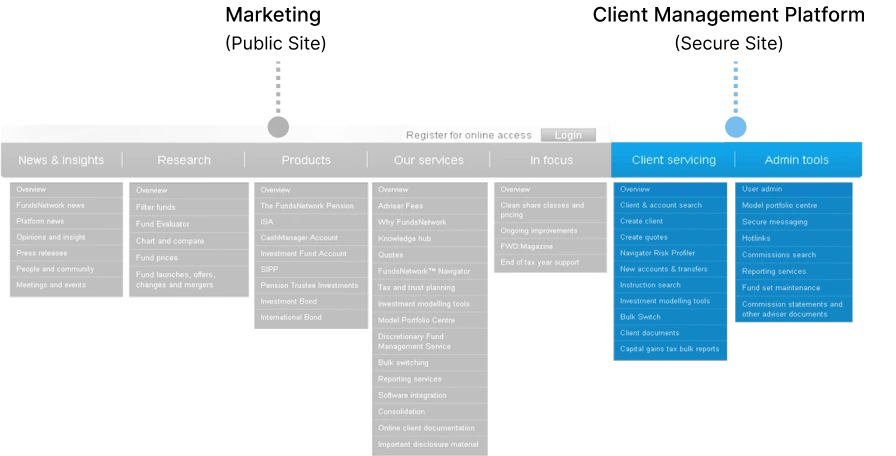
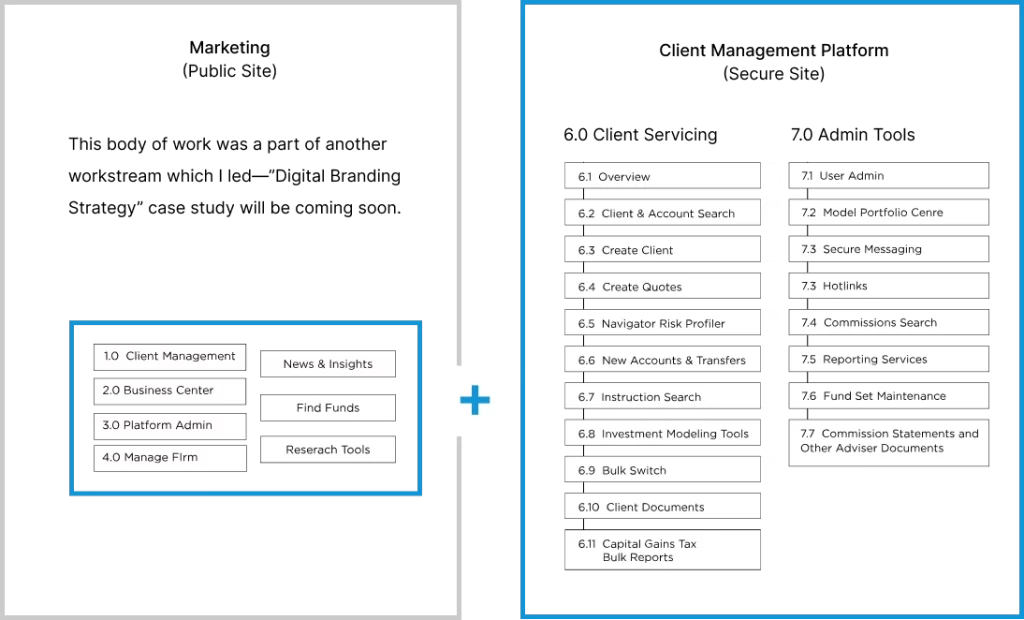
We’ve simplified the information architecture by consolidating Client Servicing and Admin sections on the platform and in addition, incorporating some business critical and marketing content.
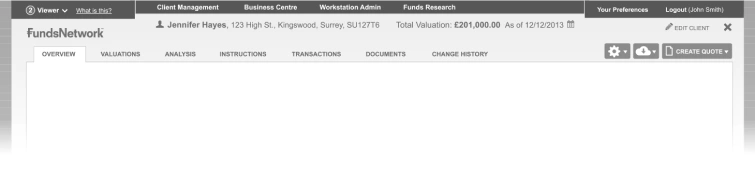
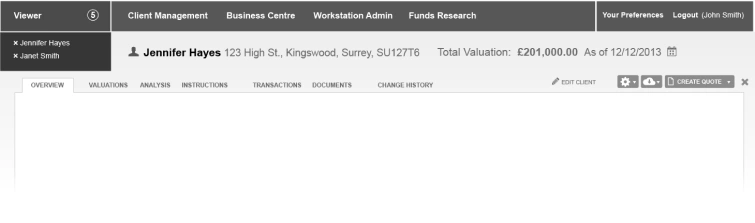
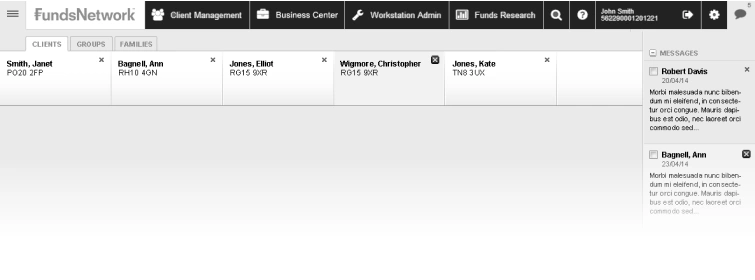
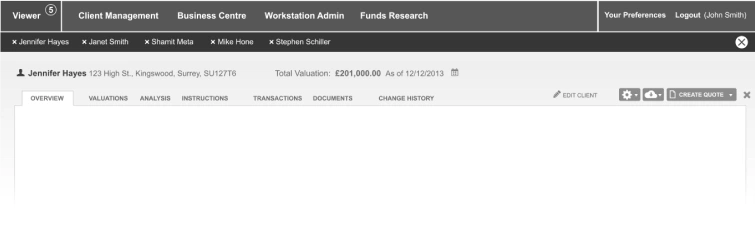
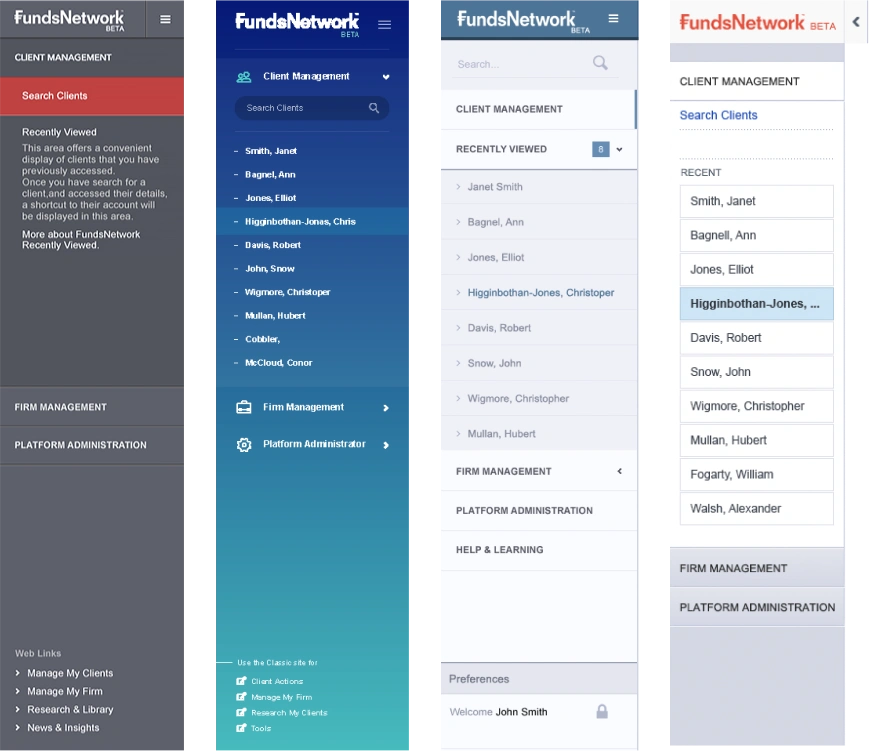
Persistent Navigational Elements
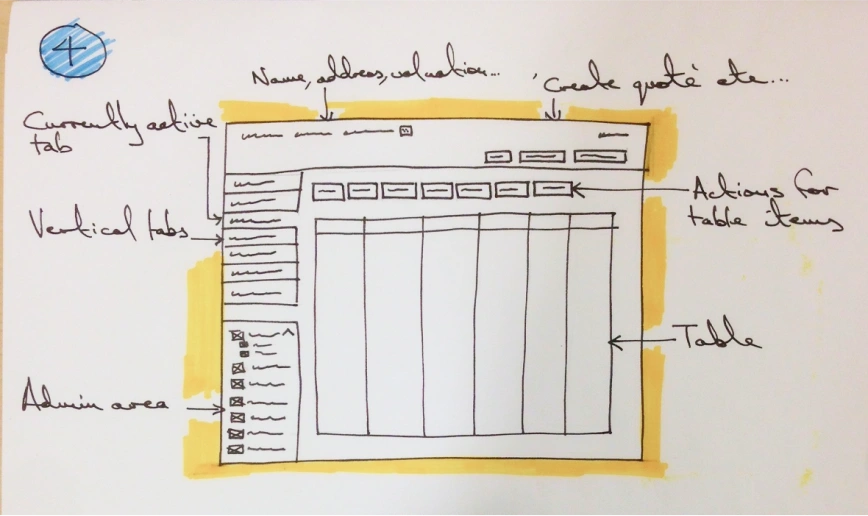
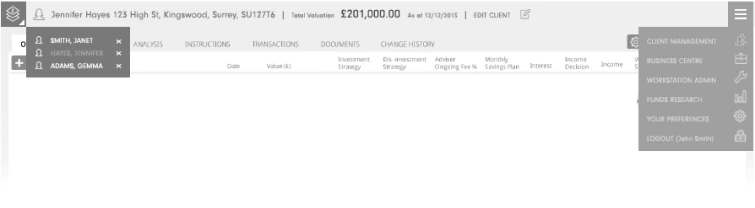
In the early stages of design, I led a series of quick and iterative design discovery exercises. We produced low-fidelity sketches to test ideas with users on various layouts, features, hierarchy and grouping of information, and interactions.
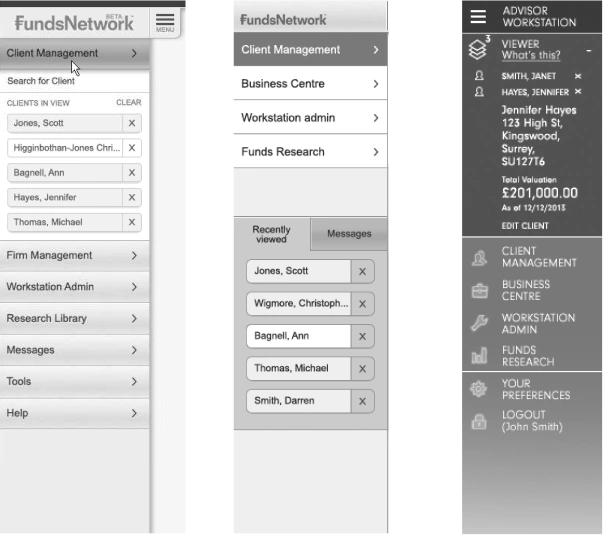
The high-fidelity visual wireframes and animations were critical to guide discussions with business stakeholders to gain clarity on objectives and in project planning for Technology and Design.
Design Exploration
Problem
- Advisors need to access and view a large amount of relevant data in a single display. This often includes dense tables with information on multiple clients and additional research material for decision making.
- From research, we’ve learned many Advisors have multiple systems opened on multiple monitors as a workaround of the limited functionality of the platform.
Solution
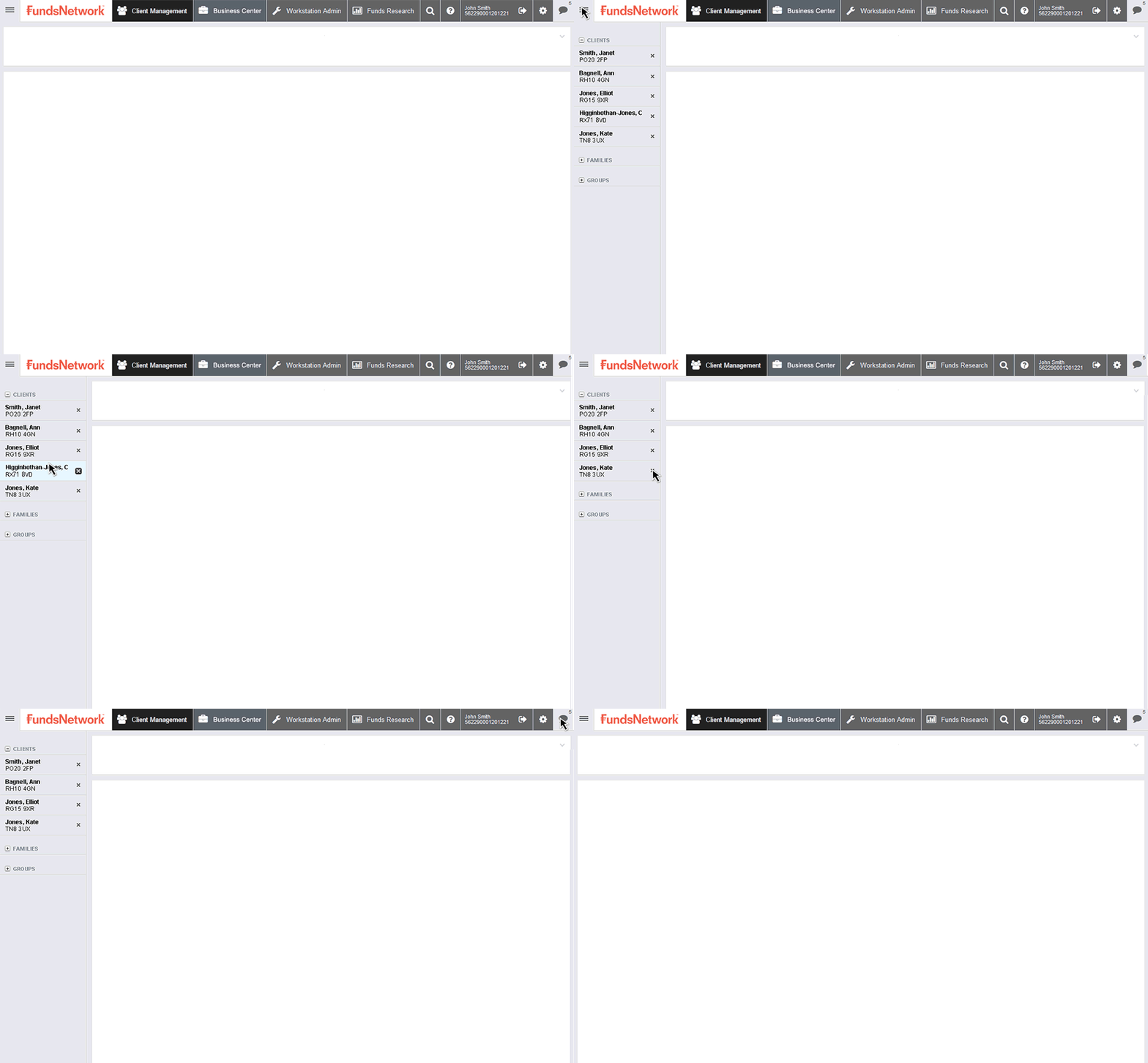
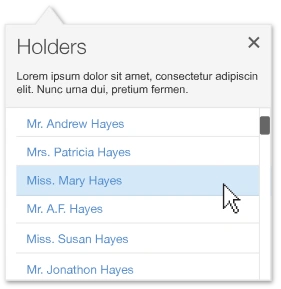
- Embedded meaningful contextual interaction/functionality with primary object on the site.
- Leveraged screen real estate and hide structured navigation until its needed.
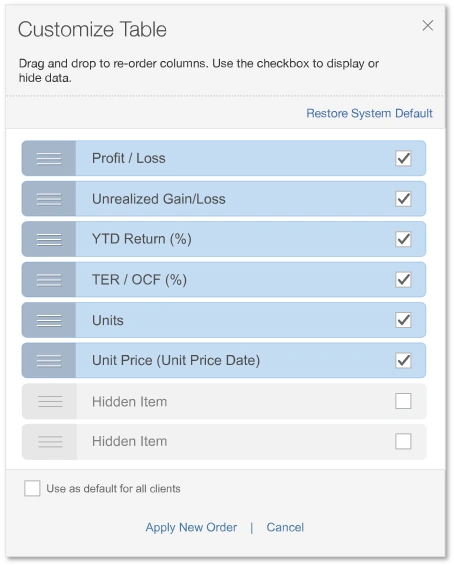
- Allow logged in users to customize the site interaction architecture – remove/suppress unused features and content.
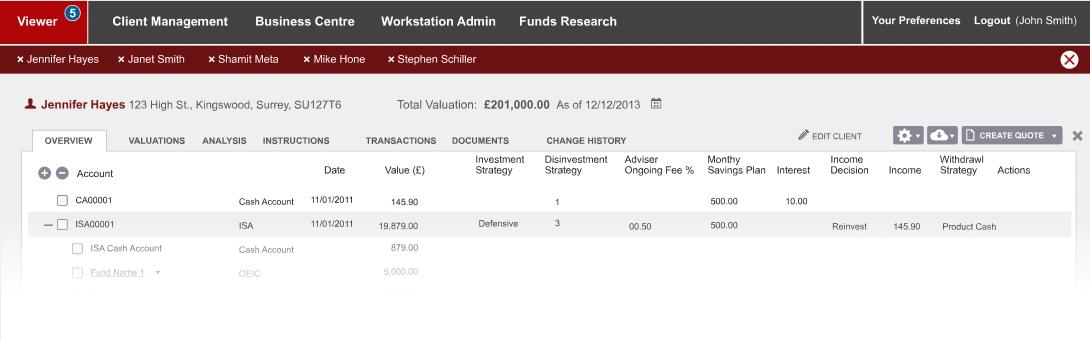
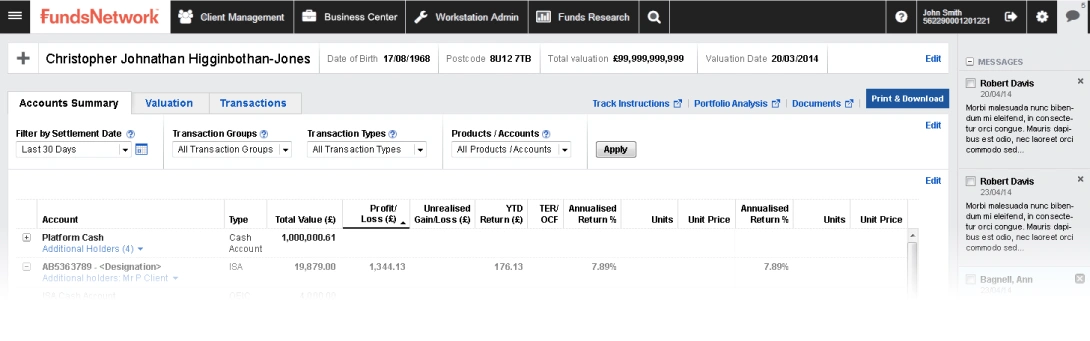
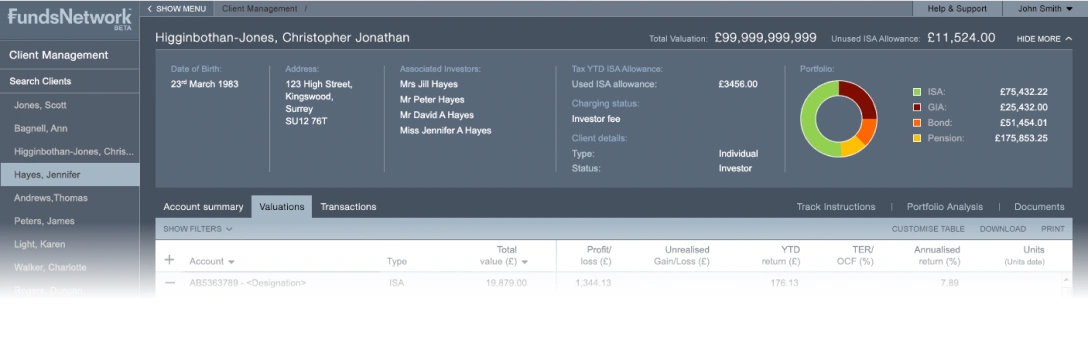
Visual Design
Streamlined Processes
Problem
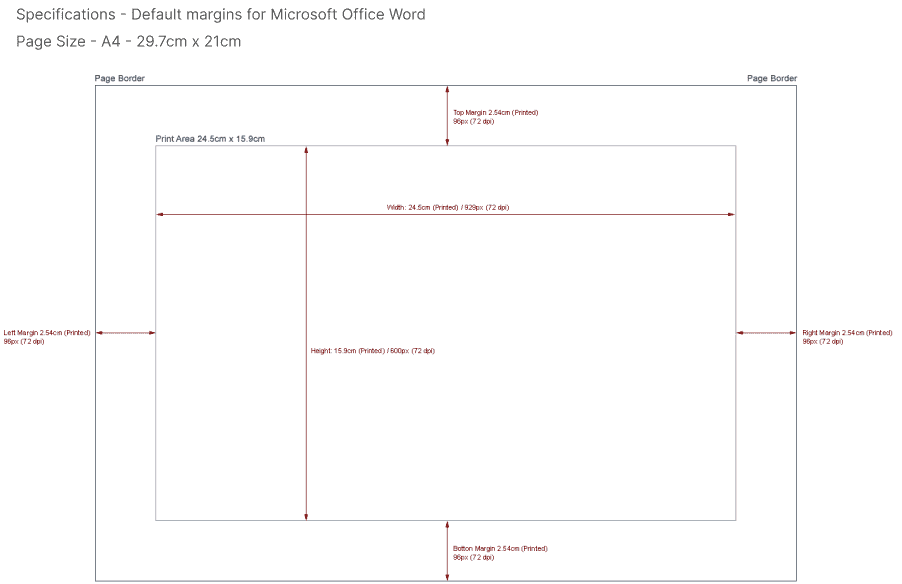
- Advisors often need to access client reports from the platform. One of the most common administrative tasks they performed were downloading and printing client documents.
- From research, we’ve learned these two tasks led to timely and tedious process as the documents were unformatted in spreadsheets.
Solution
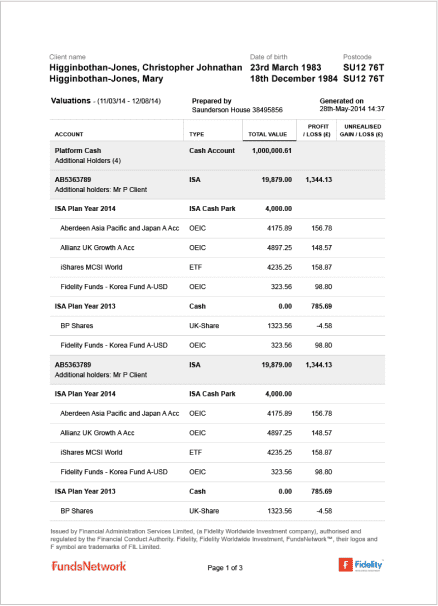
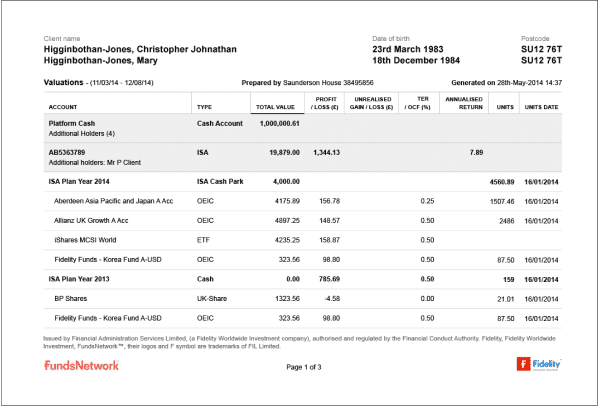
- With the new platform, one can download and print documents that are identical to what’s viewable on the platform.
- The UI of the platform was designed in consideration with this specific outcome in mind, e.g. the number of columns in tables and the number of characters of text fields.
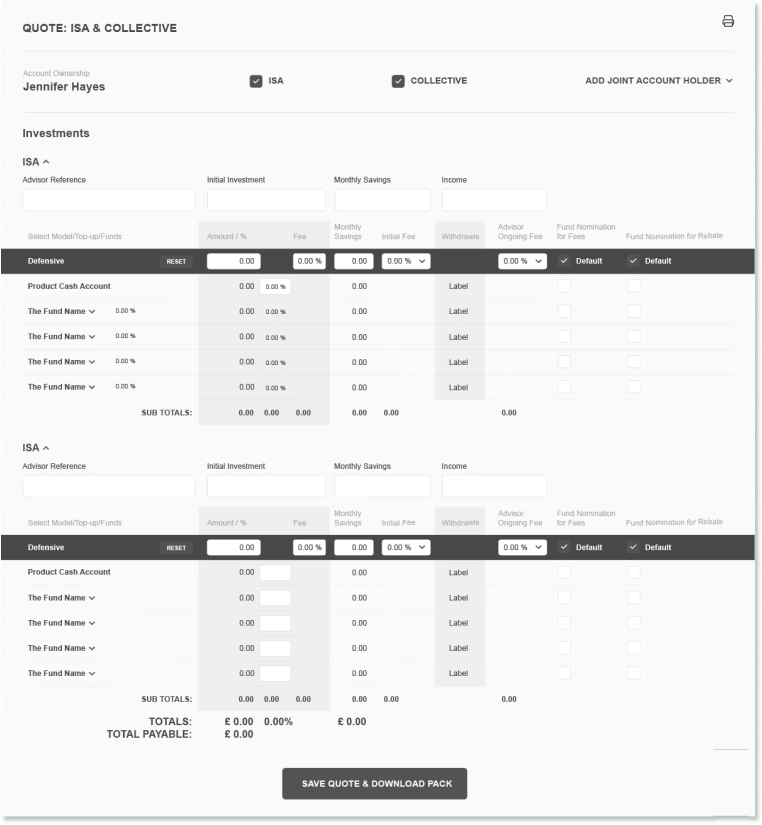
Anticipatory Design
One of the most common transactions is adding funds to an ISA (Individual Savings Account). The process anticipates the next logical step in the users’ downstream workflows and simplifies the transaction by integrating pre-existing client data, requiring minimal user input.
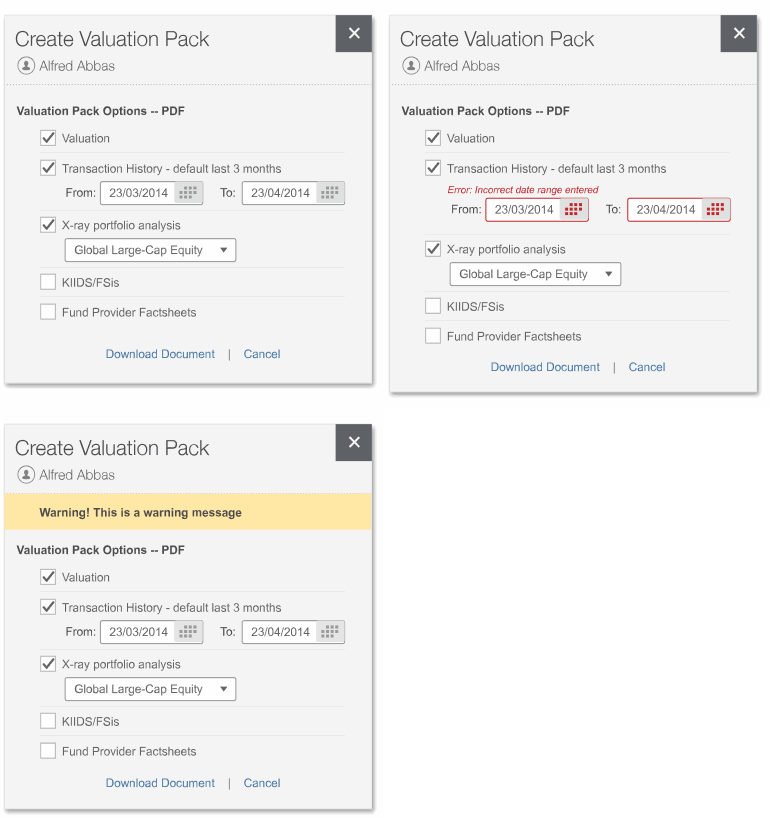
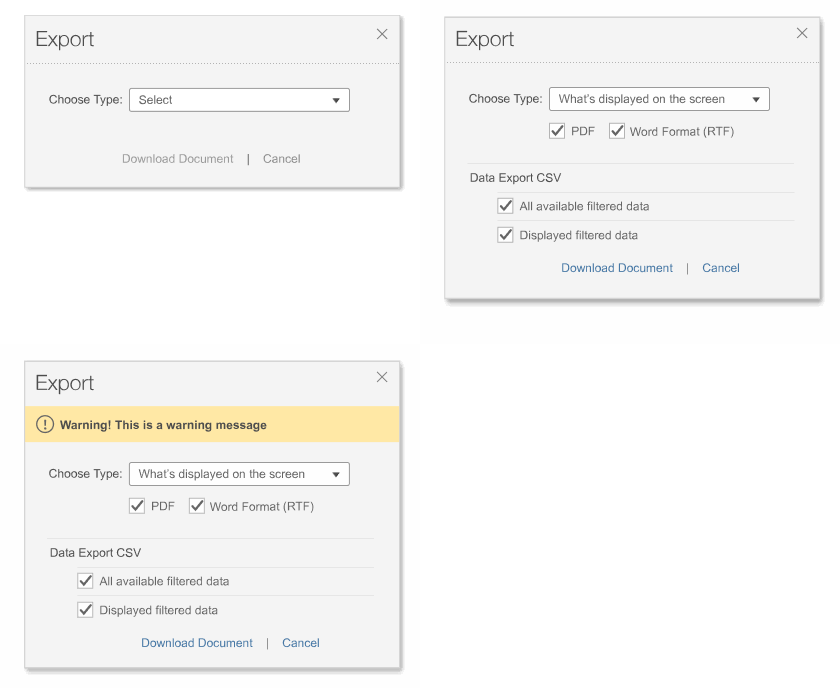
Component Library
Page & Modal Forms, Errors, Alerts
Layers
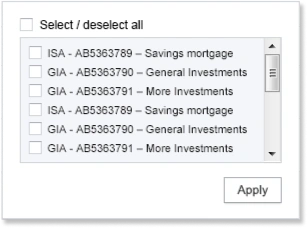
Datagrids, Lists
Double-Panel Complex Interactive Tables
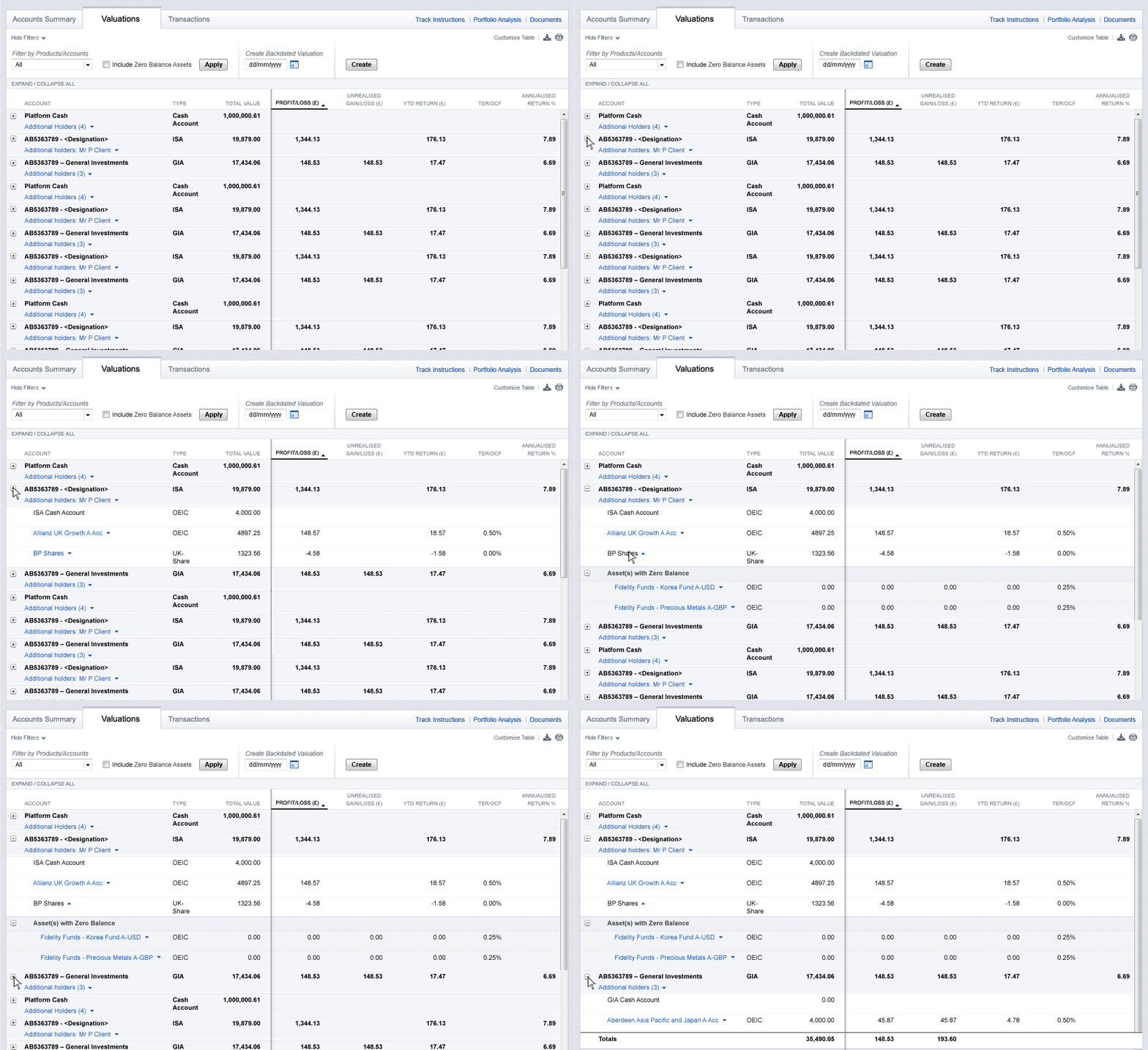
Tabs, Drawers

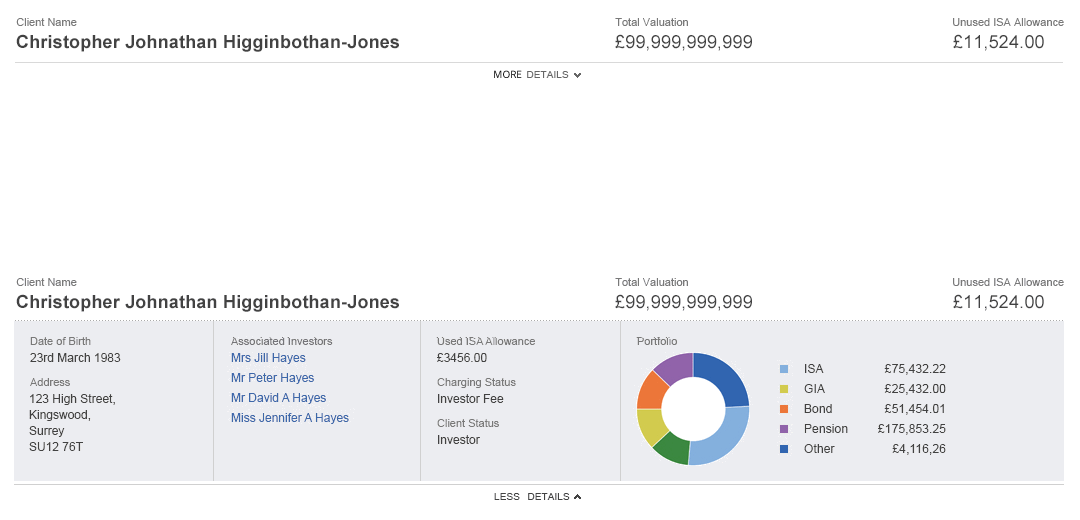
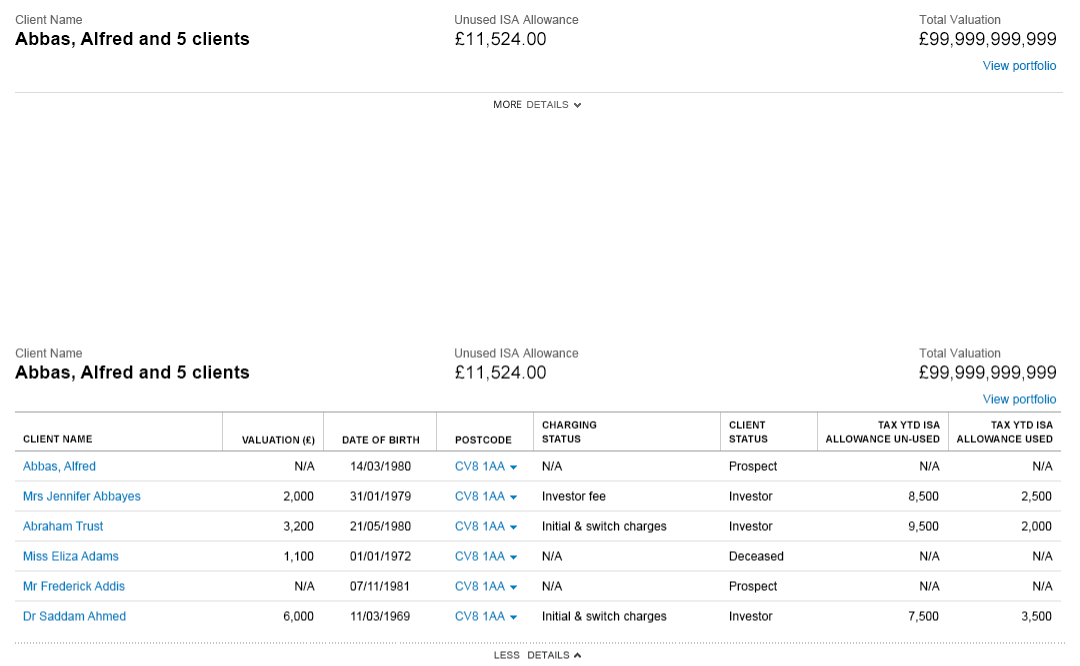
Colors, Fonts, Charts
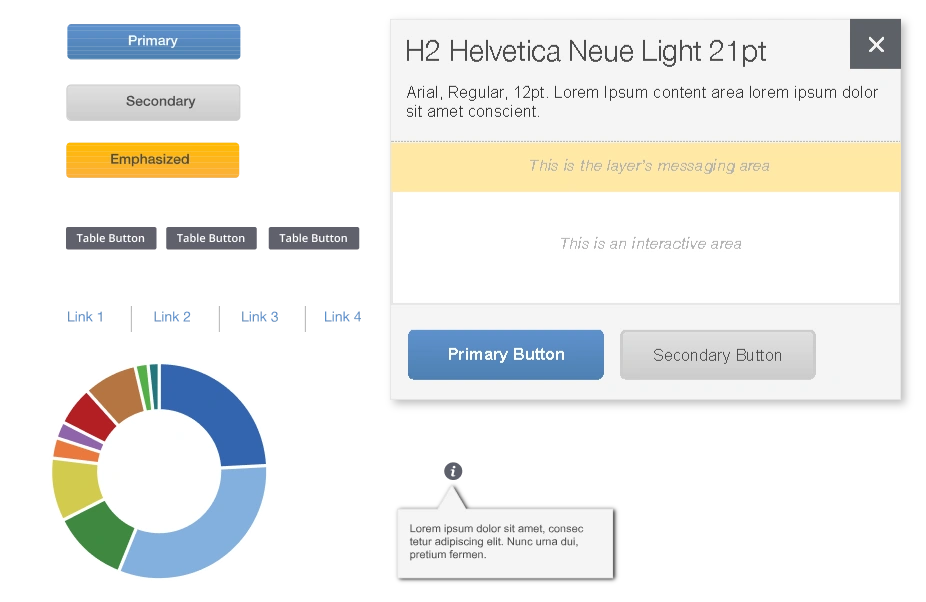
Release Design
Design Outcomes
- • Intuitive Design - ‘Remembered Last State”
- • Information Architecture matching user needs
- • Improved User Context
- • Customizable User Preferences
- • Optimized Adaptive Data Layout
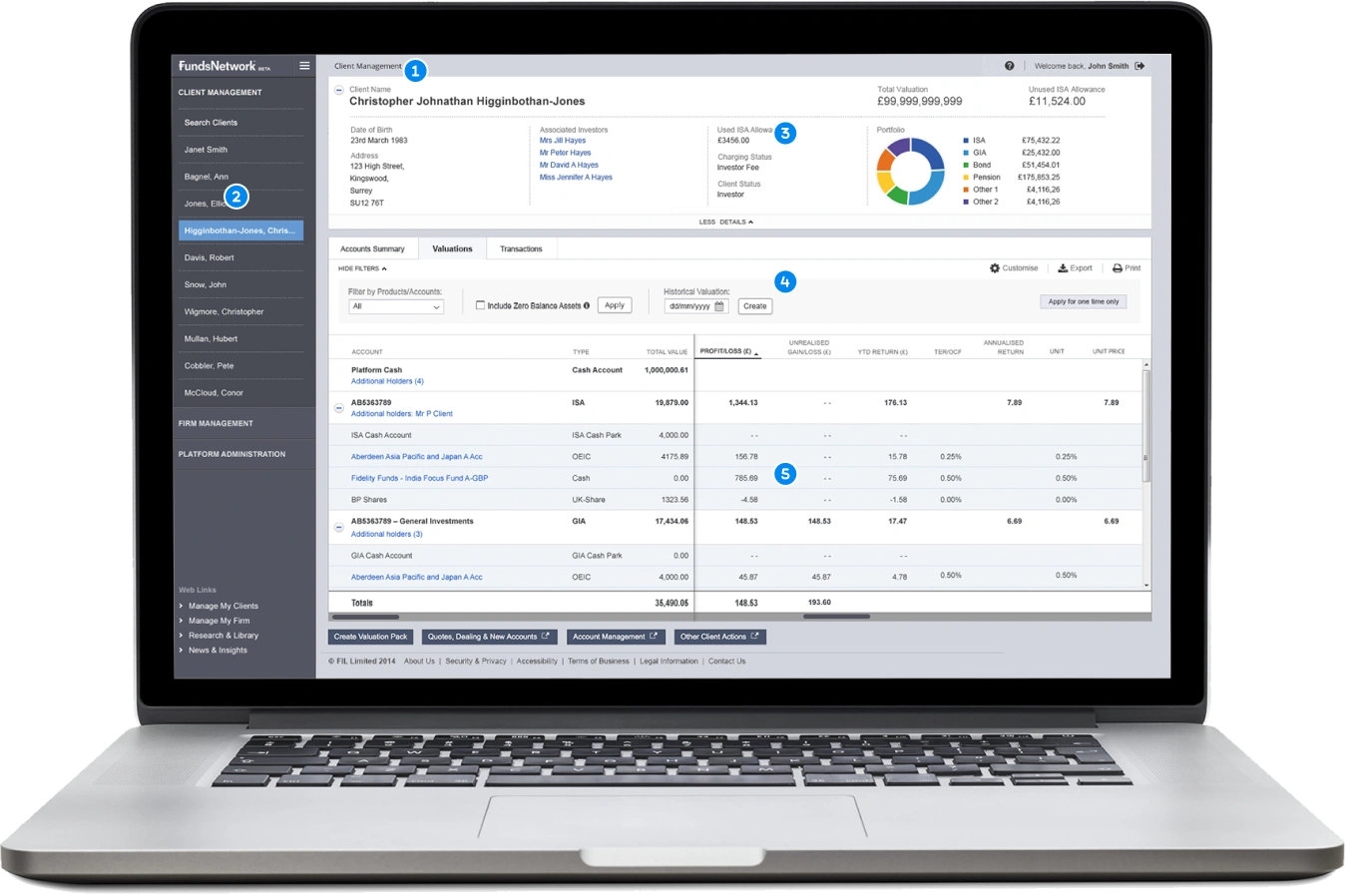
5 Main Sections of the Platform
- Professional Advisors Navigation (Website)
- Platform Navigation (FundsNetwork)
- Client Portfolio Overview
- Client Portfolio Sub-sections
- Client Sub-section Detail